
The Black Parade is MCR's third studio album. It centers on a dying man known as The Patient, the memories he confronts, and the idea that death takes the form of a parade.
Gerard Way explained that death appears as The Patient's most vivid memory: a parade from his childhood. He also said the tracks were sequenced for their musical and cinematic flow rather than the chronology of events.
The sleeve sets the stage
The album cover places the band name and album title at the top and a small marching figure below. The booklet contains an illustration of a procession made up of several figures, as well as staged photographs of the band.
Gerard Way, illustrator James Jean, photographer Chris Anthony, and costume designer Colleen Atwood contributed to the visual design. The album's imagery incorporates illustrations, photographs, and marching band-style uniforms.
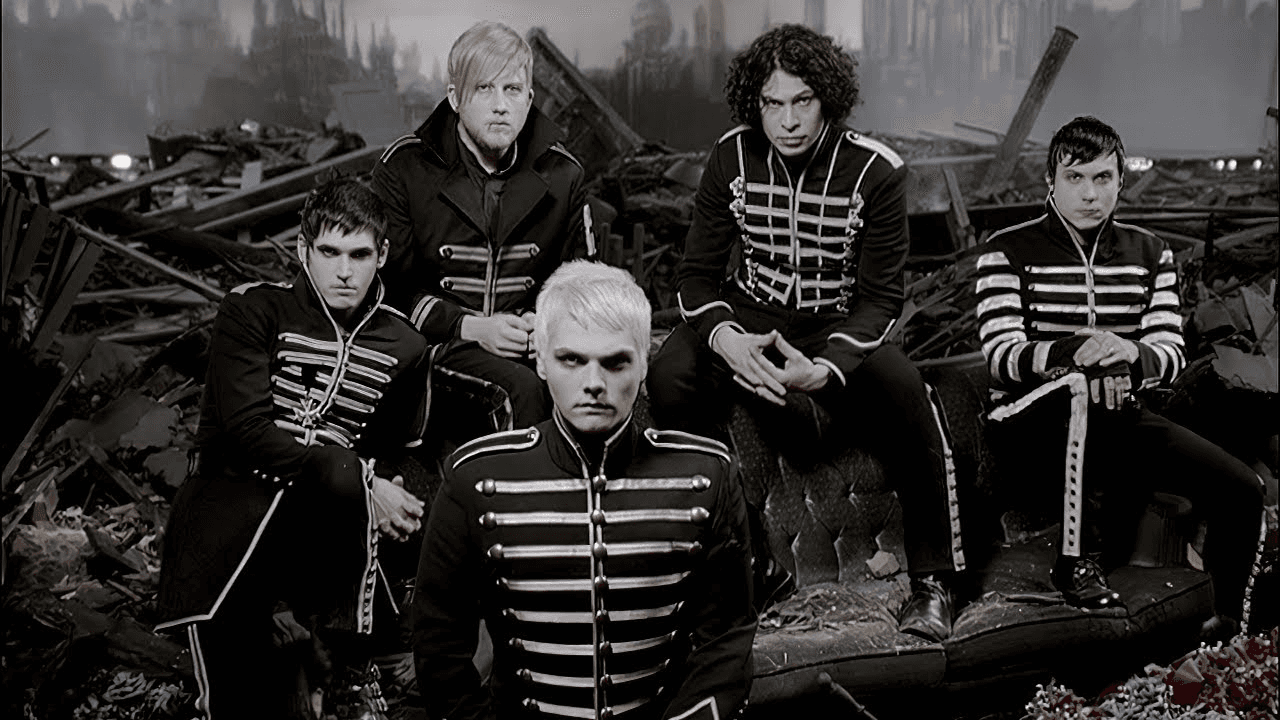
Five ways into the record
These connections are an editorial reading, not a canonical chronology.
“The End.” opens with acoustic guitar before electric guitar and drums join in. Ray Toro explained that he layered the song’s riff across several octaves. The ending leads into the opening of “Dead!”, which includes the flatline tone from a heart monitor.
The fourth track, “The Sharpest Lives,” is followed by “Welcome to the Black Parade,” which opens with piano. The piano intro leads to a marching rhythm, then to the band arrangement, and finally to layered vocals in the latter part of the song. Chris Lord-Alge said that the original session for the song contained 159 tracks.
“I Don’t Love You” deals with a romantic breakup and varies the guitar and drum arrangement between verse and chorus. “Cancer” uses piano as its main instrument and deals with illness and farewells. “Disenchanted” opens with acoustic guitar and looks back on the life the speaker has lived and the expectations they once had.
“House of Wolves” uses a swing-inflected rhythm; “Mama” features march and polka elements and a guest vocalist; “Sleep” uses recorded speech; and “Teenagers” features a blues-based riff. Gerard explained that he wanted the guest vocalist on “Mama” to answer his own voice.
“Famous Last Words,” the closing song of the album proper, expresses a resolve to go on living. In a 2008 interview, Gerard said that he liked to think the Patient chooses life. After a stretch of silence comes the hidden track “Blood,” built around piano and vocals.
Official video
The official music video for “Welcome to the Black Parade” features scenes in The Patient's hospital room, close-ups of the band members, and wide shots of the uniformed band and procession.